Cricket enthusiasts and fans of the game often find themselves daydreaming about the ultimate net session – a chance to face deliveries from the cricketing legends of yesteryear or share insights with the great minds of the game. Recently, Daniel Sams, the Australian all-rounder, opened up about his dream net session during a conversation with Matt Ellis on the Cricket Library Podcast. In this blog post, we delve into his three intriguing choices for his dream net session.
Now, let’s rewind to the Cricket Library Podcast episode where Daniel Sams shared his thoughts on the dream net session.
Facing the Don: Sir Donald Bradman
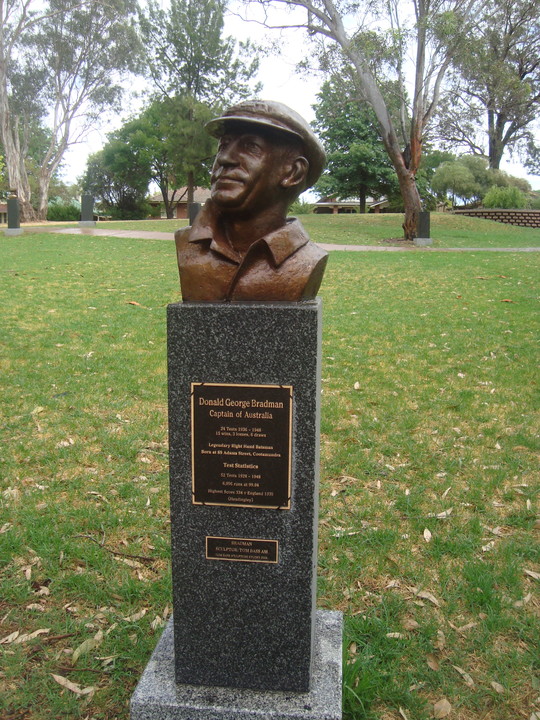
Sams’ first pick for his dream net session was none other than Sir Donald Bradman. The iconic Australian batsman, widely regarded as the greatest cricketer in history, would be a fascinating choice for any aspiring player. Sams expressed his desire to meet Bradman and pick his brain, highlighting the opportunity to witness the legendary batsman’s technique up close.
Challenging the Speedster: Shoaib Akhtar
For his second selection, Sams opted for a more contemporary cricketer, the “Rawalpindi Express” Shoaib Akhtar. Sams acknowledged the challenge of facing Akhtar’s express pace and admitted that getting in against him might be a daunting task. The choice reflected Sams’ curiosity to experience the sheer speed that made Akhtar a terror for batsmen during his playing days. He also added a stipulation that he would love for the net to be on an old school fast WACA like surface from the 80s and 90s.
Pakistan’s fast bowler Shoaib Akhtar (L) celebrates the wicket of Scotland captain George Salmond, during their Cricket World Cup match at Chester-Le-street, Durham. PA / Alamy Stock Photo
The prospect of Bradman negotiating Shoaib Akhtar’s pace added an intriguing twist to the fantasy net session, prompting the question of whether Bradman would adhere to modern safety standards or go old-school without a helmet.
Mind Games with Greg Chappell
In a nod to the mental aspect of cricket, Daniel Sams’ final pick for his dream net session was Greg Chappell. Sams, who has been actively involved in mental conditioning for cricket, expressed a keen interest in learning from Chappell’s insights into the psychological side of the game. Chappell’s emphasis on using imagery and visualisation as part of mental training resonated with Sams, who found the concept intriguing.
Cricket – The Ashes 1977 PA/Alamy Stock Photo
This choice highlighted the evolving nature of cricket training, acknowledging the importance of mental preparation alongside the physical aspects of the game.
A Cricketing Masterclass
In envisioning his dream net session, Daniel Sams painted a vivid picture of a cricketing masterclass featuring Sir Donald Bradman’s technique, Shoaib Akhtar’s raw pace, and Greg Chappell’s mental wisdom. The choices reflected Sams’ passion for the game and his eagerness to learn from cricketing legends across different eras.
While this dream net session may remain a fantasy, it serves as a testament to the timeless allure of cricket and the profound impact that legendary figures continue to have on the sport. As cricket enthusiasts, we can only imagine the magic that would unfold if such a net session were to become a reality – a captivating blend of history, speed, and cricketing wisdom.
In this episode of the Cricket Library Podcast, host Matt Ellis sits down with one of Australia’s most prolific cricket writers, Ken Piesse. With a career spanning decades, Ken has written more than 90 books on the game and served as editor of the legendary Cricketer magazine.
His work has chronicled the stories of great players, historic matches, and the rich traditions that make cricket such a unique sport.
In this conversation, Ken reflects on:
His journey into cricket journalism and publishing Memorable encounters with cricket legends.
The art of telling cricket stories through books.
The enduring charm of grassroots and country cricket.
His latest book celebrating the history and characters of Victorian country cricket.
It’s a fascinating insight into the craft of cricket writing and the passion that keeps the stories of the game alive. If you love cricket history, books, and storytelling, this is an episode you won’t want to miss.
🔔 Subscribe for more conversations with the people who shape the game.
Head to https://cricketbooks.com.au/product-c… to find all of Ken's work and much more!
In the unpredictable world of chance encounters, cricket legend Sir Vivian Richards and comedy icon Chris Rock crossed paths in an unexpected meeting that left everyone in the room on the edge of their seats. Former cricketer Adam Hollioake recently shared this captivating story during an interview for the Cricket Library Podcast with Matt Ellis.
The rendezvous took place in a stylish Sydney bar, the name of which eludes Hollioake’s memory. In the cozy ambience of the establishment, Hollioake found himself in the company of Sir Vivian Richards, a man known for his respect, manners, integrity, and impeccable character. Little did they know that this evening would take an unexpected turn with the arrival of none other than the legendary comedian Chris Rock.
As Chris Rock strolled into the bar, he and Sir Vivian Richards exchanged nods of acknowledgment. It’s unclear whether Rock recognized the cricket icon, but the two seemed to share a moment of cultural acknowledgment. Hollioake, along with a friend who happened to be a skilled boxer, observed the unfolding events with keen interest.
What happened next was nothing short of surreal. Sir Vivian Richards, a man typically known for his calm demeanor, began addressing Chris Rock as if he were a wayward son. Rock, seemingly unaware of the cricket legend’s stature, had casually propped his foot up on the sofa. This prompted Richards to instruct Rock to get his feet off the furniture.
The tension in the air was palpable, with Chris Rock’s security detail on high alert. It appeared as though a confrontation was imminent. However, to everyone’s surprise, Chris Rock chose diplomacy over drama. He calmly removed his foot from the sofa, placing it back on the floor. The potential clash between the worlds of cricket and comedy was averted, and the room breathed a collective sigh of relief.
In the aftermath of this unexpected interaction, Hollioake and his companion found themselves in awe of the encounter. Sir Vivian Richards, in his characteristic fashion, had managed to assert his authority and convey his disapproval with a touch of paternal guidance. Chris Rock, on the other hand, demonstrated humility and defused the situation before it escalated.
It was a moment where two worlds collided, and instead of clash, there was a mutual understanding and respect.
In this episode of the Cricket Library Podcast, host Matt Ellis sits down with one of Australia’s most prolific cricket writers, Ken Piesse. With a career spanning decades, Ken has written more than 90 books on the game and served as editor of the legendary Cricketer magazine.
His work has chronicled the stories of great players, historic matches, and the rich traditions that make cricket such a unique sport.
In this conversation, Ken reflects on:
His journey into cricket journalism and publishing Memorable encounters with cricket legends.
The art of telling cricket stories through books.
The enduring charm of grassroots and country cricket.
His latest book celebrating the history and characters of Victorian country cricket.
It’s a fascinating insight into the craft of cricket writing and the passion that keeps the stories of the game alive. If you love cricket history, books, and storytelling, this is an episode you won’t want to miss.
🔔 Subscribe for more conversations with the people who shape the game.
Head to https://cricketbooks.com.au/product-c… to find all of Ken's work and much more!
Cricket enthusiasts often fantasise about spending quality time with their idols, sharing the pitch, and absorbing the wisdom of those who have left an indelible mark on the game. On the Cricket Library Podcast it has become part and parcel to ask our guests to select three people who they would invite to a dream cricket net session.
Tim Ludeman’s choices were straight out of the top drawer with former England wicketkeeper Jack Russell, Indian cricket icon Sachin Tendulkar, and Aussie legend Adam Gilchrist all getting the nod to take their place at the keeper’s dream net session.
Meeting Jack Russell – A Keeping Tragic’s Dream:
Tim Ludeman’s first pick for his dream cricket nets session is none other than Jack Russell. As a self-proclaimed “keeping tragic,” Ludeman expresses his excitement at the prospect of spending an hour with Russell, a renowned figure in the world of wicketkeeping. Ludeman’s admiration for Russell’s skills is evident as he envisions himself throwing balls with the veteran keeper, relishing the opportunity to witness Russell’s catching prowess. Despite Russell’s age, Ludeman believes that the experience would be not only enjoyable but also a learning opportunity from a seasoned professional.
Sixth Cornhill Test Match – England v West Indies – The Oval PA Images / Alamy Stock Photo
Sachin Tendulkar – An Hour with the Cricketing Legend:
The second luminary on Ludeman’s dream list is the legendary Sachin Tendulkar. Ludeman reflects on the privilege of having played against Tendulkar, emphasizing the sheer enjoyment of the experience. Imagining an hour spent picking the brains of the Indian cricket icon, Ludeman envisions a session where he can delve into Tendulkar’s vast cricketing knowledge. For Ludeman, the opportunity to engage in conversation with Tendulkar and absorb insights into the game would undoubtedly be a dream come true.
Mumbai Indians Batsman Sachin Tendulkar during the Twenty20 match IPL cricket match between Deccan Chargers v Mumbai Indians WENN Rights Ltd / Alamy Stock Photo
Adam Gilchrist – Changing the Game Behind and in Front of the Stumps:
Tim Ludeman rounds off his dream trio with Australian cricket legend Adam Gilchrist. Growing up watching Gilchrist, Ludeman acknowledges the significant impact the Aussie great had on both batting and wicketkeeping. Ludeman expresses his fascination with how Gilchrist changed the dynamics of the game from behind the stumps. The prospect of spending an hour with Gilchrist, delving into discussions on both keeping and batting, is something Ludeman views as not just fun but an opportunity to understand the legendary cricketer’s thought processes.
From the artistry of Jack Russell’s wicketkeeping to the wisdom of Sachin Tendulkar and the transformative influence of Adam Gilchrist, Ludeman’s choices reflect a desire to learn, be inspired, and share the cricketing spirit with those who have left an enduring legacy on the sport. The cricket nets, in Ludeman’s imagination, become a stage for not only refining skills but also for the exchange of cricketing wisdom that transcends generations.
In this episode of the Cricket Library Podcast, host Matt Ellis sits down with one of Australia’s most prolific cricket writers, Ken Piesse. With a career spanning decades, Ken has written more than 90 books on the game and served as editor of the legendary Cricketer magazine.
His work has chronicled the stories of great players, historic matches, and the rich traditions that make cricket such a unique sport.
In this conversation, Ken reflects on:
His journey into cricket journalism and publishing Memorable encounters with cricket legends.
The art of telling cricket stories through books.
The enduring charm of grassroots and country cricket.
His latest book celebrating the history and characters of Victorian country cricket.
It’s a fascinating insight into the craft of cricket writing and the passion that keeps the stories of the game alive. If you love cricket history, books, and storytelling, this is an episode you won’t want to miss.
🔔 Subscribe for more conversations with the people who shape the game.
Head to https://cricketbooks.com.au/product-c… to find all of Ken's work and much more!
In the grand arena of international cricket, where legends are forged and tales of grit and determination are etched into the annals of the sport, Nathan Hauritz emerged as a promising talent at the tender age of 20. Hailing from Queensland, Australia, Hauritz’s early exploits at the under-19 level saw him sharing the field with cricket luminaries such as Michael Clarke, Ed Cowan, Mitch Johnson, Shaun Marsh, Shane Watson, and Andrew McDonald.
Having donned the Baggy Green in 17 Test Matches, Hauritz made a significant impact with the ball, claiming 63 wickets, including a memorable performance with career-best figures of 5-53. His prowess extended to the limited-overs format, where he featured in 58 ODIs, contributing with 63 wickets and showcasing his best figures of 4-29.
However, Hauritz was not merely a specialist with the ball; he wielded the willow with finesse, notching up three half-centuries for Australia. His highest First-Class score of 146 for New South Wales against South Australia in 2010 underscored his all-round prowess.
Yet, the cricketing world witnessed a unique chapter in Nathan Hauritz’s career—a tale not only of his bowling prowess but also of his resilience as a nightwatchman in a Boxing Day Test Match at the iconic Melbourne Cricket Ground (MCG). In an interview with the Cricket Library podcast, Hauritz shared the behind-the-scenes narrative of that unforgettable experience.
With just 10 overs remaining in the day, Hauritz found himself thrust into an unexpected role. As he recalled on the podcast, the captain, Michael Clarke, faced a dilemma as to who should go out as the nightwatchman. With someone getting out and five overs still to play, Hauritz stepped up and volunteered for the task. What followed was a gripping account of facing deliveries from a formidable opponent, navigating the challenges, and, ultimately, relishing the experience.
In Hauritz’s own words, the adrenaline of facing high-speed deliveries, the strategic discussions with teammates, and the near-miss run-out on the field added layers to this memorable Boxing Day encounter. In this excerpt of the Cricket Library Podcast, Nathan shares the nuances of that intriguing episode, shedding light on his unexpected nightwatchman role at the MCG.
In this episode of the Cricket Library Podcast, host Matt Ellis sits down with one of Australia’s most prolific cricket writers, Ken Piesse. With a career spanning decades, Ken has written more than 90 books on the game and served as editor of the legendary Cricketer magazine.
His work has chronicled the stories of great players, historic matches, and the rich traditions that make cricket such a unique sport.
In this conversation, Ken reflects on:
His journey into cricket journalism and publishing Memorable encounters with cricket legends.
The art of telling cricket stories through books.
The enduring charm of grassroots and country cricket.
His latest book celebrating the history and characters of Victorian country cricket.
It’s a fascinating insight into the craft of cricket writing and the passion that keeps the stories of the game alive. If you love cricket history, books, and storytelling, this is an episode you won’t want to miss.
🔔 Subscribe for more conversations with the people who shape the game.
Head to https://cricketbooks.com.au/product-c… to find all of Ken's work and much more!
Australia’s Shane Warne (right) and captain Ricky Ponting unsuccessfully appeal for the wicket of England’s Andrew Strauss to umpire Aleem Dar. Contributor:PA Images / Alamy Stock Photo
In the illustrious career of cricket legend Shane Warne, the latter part was marked by a remarkable transformation. Former international umpire Peter Parker, reflects on this evolution, particularly highlighting Warne’s mastery of mind control and the development of new bowling tricks. In this blog post, we delve into the third phase of Shane Warne’s career, exploring the intricacies of his bowling techniques.
The Art of Mind Control
During the latter part of his career, Warne became the master of mind control, a skill that set him apart from his peers. Peter Parker notes Warne’s ability to manipulate batsmen, coercing them to play in a way that suited his strategy. Despite not possessing the same level of control as earlier in his career, Warne compensated with an enormous cricketing intellect. His delivery might have been slower through the air, but his cricketing IQ was unparalleled.
Bag of Tricks
Warne’s arsenal of spin bowling techniques expanded significantly in the latter years, thanks to his relentless pursuit of excellence. He incorporated party tricks into his repertoire, including two flippers – one of which was a traditional flick through the thumb and the middle finger, while the other emerged from the side of his hand. With big leg spin, small leg spin, and top spin in his toolkit, Warne’s variations posed a constant challenge for batsmen.
Shane Warne’s third phase in cricket was characterized by a mesmerizing display of mind control and an expanded repertoire of spin bowling techniques. As Peter Parker aptly observes, Warne’s journey involved not only refining his existing skills but also acquiring new ones.
In the end, Warne’s legacy is not just one of statistics but also of a cricketer who continually pushed the boundaries of his craft, leaving an indelible mark on the sport.
In this episode of the Cricket Library Podcast, host Matt Ellis sits down with one of Australia’s most prolific cricket writers, Ken Piesse. With a career spanning decades, Ken has written more than 90 books on the game and served as editor of the legendary Cricketer magazine.
His work has chronicled the stories of great players, historic matches, and the rich traditions that make cricket such a unique sport.
In this conversation, Ken reflects on:
His journey into cricket journalism and publishing Memorable encounters with cricket legends.
The art of telling cricket stories through books.
The enduring charm of grassroots and country cricket.
His latest book celebrating the history and characters of Victorian country cricket.
It’s a fascinating insight into the craft of cricket writing and the passion that keeps the stories of the game alive. If you love cricket history, books, and storytelling, this is an episode you won’t want to miss.
🔔 Subscribe for more conversations with the people who shape the game.
Head to https://cricketbooks.com.au/product-c… to find all of Ken's work and much more!
Aiden Blizzard’s cricketing career reached new heights when he had the incredible opportunity to share the field with the legendary Sachin Tendulkar during the Indian Premier League (IPL). In a recent interview on the Cricket Library Podcast, Blizzard recounted his extraordinary experience and the profound impact it had on his mindset as a player.
Mumbai Indians Batsman Sachin Tendulkar during the Twenty20 match IPL cricket match between Deccan Chargers v Mumbai Indians WENN Rights Ltd / Alamy Stock Photo
The Unparalleled Mindset: Blizzard expressed the unparalleled uniqueness of playing alongside Tendulkar, emphasising the transformative effect it had on his own mindset. He described it as encountering an “uber-elite mindset” rarely seen in everyday life or even in Australian cricket. Blizzard was in awe of Tendulkar’s performances, stating, “To watch him from afar was unbelievable.”
A Dream Turned Reality: To find himself fielding alongside the cricketing maestro was a dream come true for Blizzard. Reflecting on the experience, he couldn’t help but gush about its sheer amazement, saying, “It was absolutely amazing. It gives you shivers.” The opportunity to play alongside his childhood idol was one Blizzard had never even dared to dream about.
The Unforgettable Walk to the Crease: Among the many unforgettable memories, one that stood out for Blizzard was the electric atmosphere of walking out to bat with Sachin Tendulkar at Mumbai’s prestigious Wankhede Stadium. Blizzard vividly recalled the intensity of the crowd, surpassing even the grand finals of the Australian Football League. He admitted, “I don’t think I came to terms with the intensity of the crowd.”
The Influence of the IPL: Blizzard recognised the immense impact of the IPL on world cricket and expressed his hope that other leagues worldwide could replicate its success. He acknowledged the league’s ability to generate significant revenue, which, in turn, benefits grassroots cricket. Blizzard stressed the importance of investing in grassroots cricket, stating, “That’s where we need the most investment moving forward to ensure that cricket stays healthy.”
Aiden Blizzard’s journey of playing alongside Sachin Tendulkar in the IPL was nothing short of extraordinary. The encounter with Tendulkar’s “uber-elite mindset” left an indelible mark on Blizzard’s own approach to the game. The dream-turned-reality experience of sharing the field with his childhood idol surpassed all expectations. Blizzard’s recollections of walking out to bat with Tendulkar in front of an intense crowd at Wankhede Stadium were etched into his memory forever. He recognized the far-reaching influence of the IPL, hoping that other leagues worldwide would follow suit in generating revenue for grassroots cricket. Blizzard’s optimism for the future of cricket underscored the importance of investing in young talent and providing opportunities for them to thrive. Playing with Tendulkar in the IPL not only enriched Blizzard’s career but also served as a testament to the transformative power of mentorship and the enduring legacy of cricketing legends.
In this episode of the Cricket Library Podcast, host Matt Ellis sits down with one of Australia’s most prolific cricket writers, Ken Piesse. With a career spanning decades, Ken has written more than 90 books on the game and served as editor of the legendary Cricketer magazine.
His work has chronicled the stories of great players, historic matches, and the rich traditions that make cricket such a unique sport.
In this conversation, Ken reflects on:
His journey into cricket journalism and publishing Memorable encounters with cricket legends.
The art of telling cricket stories through books.
The enduring charm of grassroots and country cricket.
His latest book celebrating the history and characters of Victorian country cricket.
It’s a fascinating insight into the craft of cricket writing and the passion that keeps the stories of the game alive. If you love cricket history, books, and storytelling, this is an episode you won’t want to miss.
🔔 Subscribe for more conversations with the people who shape the game.
Head to https://cricketbooks.com.au/product-c… to find all of Ken's work and much more!
In the world of cricket, there’s a fascination with dream scenarios, and on the Cricket Library Podcast, guests are often posed with the enticing challenge of selecting three individuals for their dream cricket net session. Recently, the spotlight turned to David Hussey, who, on short notice, revealed his dream trio: Derek Jeter from the New York Yankees, the iconic comedian Jerry Seinfeld, and the late, great Shane Warne. Let’s delve into the reasons behind Hussey’s unique choices and explore the potential magic that could unfold on the cricket field.
Derek Jeter – Leadership and Legacy:
New York Yankees Derek Jeter leaps and celebrates after hitting a walk off game winning single in the bottom of the 9th inning against the Baltimore Orioles in Derek Jeter’s final game ever at at Yankee Stadium in New York City on September 25, 2014. UPI/John Angelillo
David Hussey’s admiration for Derek Jeter stems from the baseball legend’s remarkable career with the New York Yankees. Jeter’s leadership, loyalty to the team, and his status as captain left a lasting impression on Hussey. Imagining Jeter on the cricket field, Hussey envisions an individual who not only plays for the team but embodies the qualities of a great leader. The prospect of sharing the game of cricket with Jeter and hearing his stories is a testament to the allure of cross-sport camaraderie.
Jerry Seinfeld – Humor and Insight:
Jerry Seinfeld, the master of comedy, occupies the second spot in Hussey’s dream net session. Beyond the cricketing realm, Seinfeld is chosen for his humor value and the prospect of engaging in insightful conversations. For Hussey, having Seinfeld next to him at the nets is an opportunity not just to share the game but also to enjoy the comedic genius’s anecdotes and perspectives. It adds a unique dimension to the cricketing atmosphere, infusing humor into the sporting camaraderie.
GADYJB Jerry Seinfeld arrives for the UK Premiere of Bee Movie at Empire in Leicester Square, central London.PA Images / Alamy Stock Photo
Shane Warne – Remembering a Spin Bowling Legend:The third and poignant choice in David Hussey’s dream trio is the late Shane Warne, widely regarded as the world’s greatest spin bowler. Hussey reflects on Warne’s unparalleled skills and expresses the deep sense of loss since the cricketing legend’s passing. Having shared great camaraderie with Warne, Hussey acknowledges the unique qualities that made Warne an exceptional spin bowler and confidant. The dream session becomes a touching wish to spend more time with the cricketing icon and relive the moments of shared camaraderie.
Australia’s Shane Warne (right) and captain Ricky Ponting unsuccessfully appeal for the wicket of England’s Andrew Strauss to umpire Aleem Dar. PA Images / Alamy Stock Photo
David Hussey’s dream cricket net session takes us beyond the boundaries of cricket, weaving together sportsmanship, humor, and the legacy of a cricketing legend. Derek Jeter, Jerry Seinfeld, and Shane Warne represent a diverse trio that transcends individual expertise, creating a tapestry of camaraderie and shared passion. In this dream scenario, the cricket nets become a stage for cross-disciplinary connections, laughter, and a heartfelt tribute to a cricketing great.
In this episode of the Cricket Library Podcast, host Matt Ellis sits down with one of Australia’s most prolific cricket writers, Ken Piesse. With a career spanning decades, Ken has written more than 90 books on the game and served as editor of the legendary Cricketer magazine.
His work has chronicled the stories of great players, historic matches, and the rich traditions that make cricket such a unique sport.
In this conversation, Ken reflects on:
His journey into cricket journalism and publishing Memorable encounters with cricket legends.
The art of telling cricket stories through books.
The enduring charm of grassroots and country cricket.
His latest book celebrating the history and characters of Victorian country cricket.
It’s a fascinating insight into the craft of cricket writing and the passion that keeps the stories of the game alive. If you love cricket history, books, and storytelling, this is an episode you won’t want to miss.
🔔 Subscribe for more conversations with the people who shape the game.
Head to https://cricketbooks.com.au/product-c… to find all of Ken's work and much more!
Alan Curr has an adventurous spirit that has taken him to all corners of the globe. In this edition of the Cricket Library Podcast, he shares the origins of his passions for the game, organising a game of cricket on Mt Everest, landing a job with Japan cricket & the emergence of cricket in Japan.
The conversation would not be complete without Alan telling us who he would invite to his dream cricket net session.
Make sure you are following Japan Cricket on all of their social media platforms and read the full story of the cricket games on Mt Everest by getting yourself a copy of the book.
In this episode of the Cricket Library Podcast, host Matt Ellis sits down with one of Australia’s most prolific cricket writers, Ken Piesse. With a career spanning decades, Ken has written more than 90 books on the game and served as editor of the legendary Cricketer magazine.
His work has chronicled the stories of great players, historic matches, and the rich traditions that make cricket such a unique sport.
In this conversation, Ken reflects on:
His journey into cricket journalism and publishing Memorable encounters with cricket legends.
The art of telling cricket stories through books.
The enduring charm of grassroots and country cricket.
His latest book celebrating the history and characters of Victorian country cricket.
It’s a fascinating insight into the craft of cricket writing and the passion that keeps the stories of the game alive. If you love cricket history, books, and storytelling, this is an episode you won’t want to miss.
🔔 Subscribe for more conversations with the people who shape the game.
Head to https://cricketbooks.com.au/product-c… to find all of Ken's work and much more!
In the dynamic landscape of Australian athletics, Emelia Surch emerges as a multi-faceted talent with a story that transcends the boundaries of track and field. At 20, she has not only represented Australia on the global stage in the World U20 Championships in Columbia, securing a remarkable 4th place in the long jump with a leap of 6.45m, but she also holds the esteemed titles of the current under-20 Oceania champion and record holder in long jump and hurdles. Amidst her exploits on the track, Emelia is navigating the challenging realm of academia, pursuing studies in nursing at university, and navigating 4 am starts working at the Coles bakery. A true embodiment of dedication and versatility, she also trains rigorously six days a week for the seven events in the heptathlon, showcasing her commitment to excellence in every aspect of her life. Guiding her on this extraordinary journey is coach Glynis Nunn, a 1984 Olympic Gold Medalist, who envisions Olympic success for Emelia with the proper support. “If Emelia had funding, and we can replace the work at Coles with preparation, recovery, and training, I know I have an Olympic Athlete who is capable of achieving something very special,” says Nunn. As Emelia seeks sponsors to elevate her athletic career and studies to new heights, her narrative unfolds as a harmonious blend of record-breaking achievements, Olympic aspirations, and the relentless pursuit of excellence on all fronts.
With a genuine desire to unveil the intricacies of Emelia’s journey, the Cricket Library actively sought her perspective, and she graciously shared her insights with us, infusing the conversation with a delightful sprinkle of cricket.
Balancing the demands of athletic training, nursing studies, and the heptathlon is undoubtedly challenging. How do you manage your time effectively to excel in all these diverse aspects of your life?
“I’ve been really fortunate to have the guidance of my coach and mentor Glynis Nunn, who has obviously experienced these demands herself. I also gained a wealth of knowledge through the Gold Coast Academy of Sport’s future star program, which had a component that specifically focused on time management. I have found that invaluable.”
Studying nursing at university adds another layer to your already busy life. How do you see the connection between your studies and athletics, and how does one influence the other in your personal and professional development?
“I’ve just completed my second year of nursing and I absolutely love it. Knowing and understanding more about the body, medication, and health obviously helps me to take better care of myself, particularly when it comes to illnesses and injuries.”
Coach Glynis Nunn has expressed confidence in your Olympic potential. How does her mentorship guide your aspirations, and what role does she play in helping you navigate the complexities of combining sports and studies?
“I’m pretty lucky to have an Olympic Champion as a coach, role model, and mentor. Glynis and I have a very special relationship. She’s been my coach for 7 years, and in that time there have been many highs and lows, but I can tell her anything and our relationship is built on trust. She is the kindest, most generous person who gives it to me straight. I definitely don’t take that for granted.”
Training for seven events in the heptathlon is a substantial commitment. Can you share some of the challenges you face in preparing for such a diverse range of disciplines and how you overcome them?
“Basically, it means training for multiple events at each session, which means my sessions are longer. For example, on a Monday, I’ll arrive before everyone else and get a Javelin session in, before a technical Long Jump session, and then track work. Sometimes my session can be up to 3 hours. On top of training for the 7 events, I also need days for gym and strength work as well as recovery.”
With the ultimate goal of reaching the Olympics, what steps are you taking to qualify, and how do you envision your journey towards achieving that dream?
“Actually, with support from Cameron at Global Sports 360 and some very generous people, I’ve been able to give up working at Coles for the next 6 months and focus entirely on my training. My goal is to qualify for the Oceania Championships in Fiji and give myself the best chance of making the Australian Team. Having extra time in my week means my coach and I have been able to schedule in additional sessions and include purposeful recovery sessions too, which I’ve never been able to do before.”
As you seek sponsors to support your athletic endeavors and studies, what message would you like to convey to potential sponsors, and how do you believe their backing can make a significant difference in your pursuit of excellence?
“Sponsorship and support will mean I can fully commit to my intense training load, honing my skills and refining the technical elements of each event and ensure I have enough time for recovery sessions to guarantee my body gets the necessary rest to perform at its peak. It means I have a real chance of turning my dreams into reality and can represent my country on the world stage.
I also believe I am a good ambassador and role model, particularly for girls in sport. I give 100% to everything I do and I’m determined to reach my full potential. Knowing that people are behind me, supporting me, just fuels my drive to be the best.”
From your perspective as an athlete in a different discipline, what do you admire most about the physical and mental skills required in cricket?
“I’ve always admired the mental strength of cricket players. I just have no idea how the players can be out there for extended periods of time be completely focused for the entire duration of the game. Also strategizing and the tactical aspect of cricketers is pretty impressive and aside from running the 800m in a heptathlon there isn’t really any strategizing you just need to perform every event at 100% and give it all you’ve got every time.”
Kate Peterson has a background in Javelin and is now making her mark in Cricket as a fast bowler. Considering the technical aspects of cricket, are there specific skills or techniques in the sport that you find particularly impressive or intriguing, and do you see any parallels with skills in your own discipline?
“I really feel like cricket requires so many very different skills, they are like the heptathletes of bat and ball games, and even though I’m a heptathlete the only skill I’d nail would be the sprint between the wickets. There’s no way I could concentrate like they do for such long periods of time. As for Javelin, it’s most definitely is not my strongest event, I most certainly could use some tips from Kate.”
Do you have any memories of playing or watching cricket growing up?
“I have only recently started watching cricket and to be honest am most interested in the women’s league, but I feel like it’s always on in the background, in the lounge room, in summer. As for playing, cricket on the beach at camping is about the only experience I have actually playing.”
Who is your team in the Big Bash?
“I’m an Alana King fan. So definitely the Perth Scorchers, but also the Brisbane Heat when they are playing any of the other teams.”
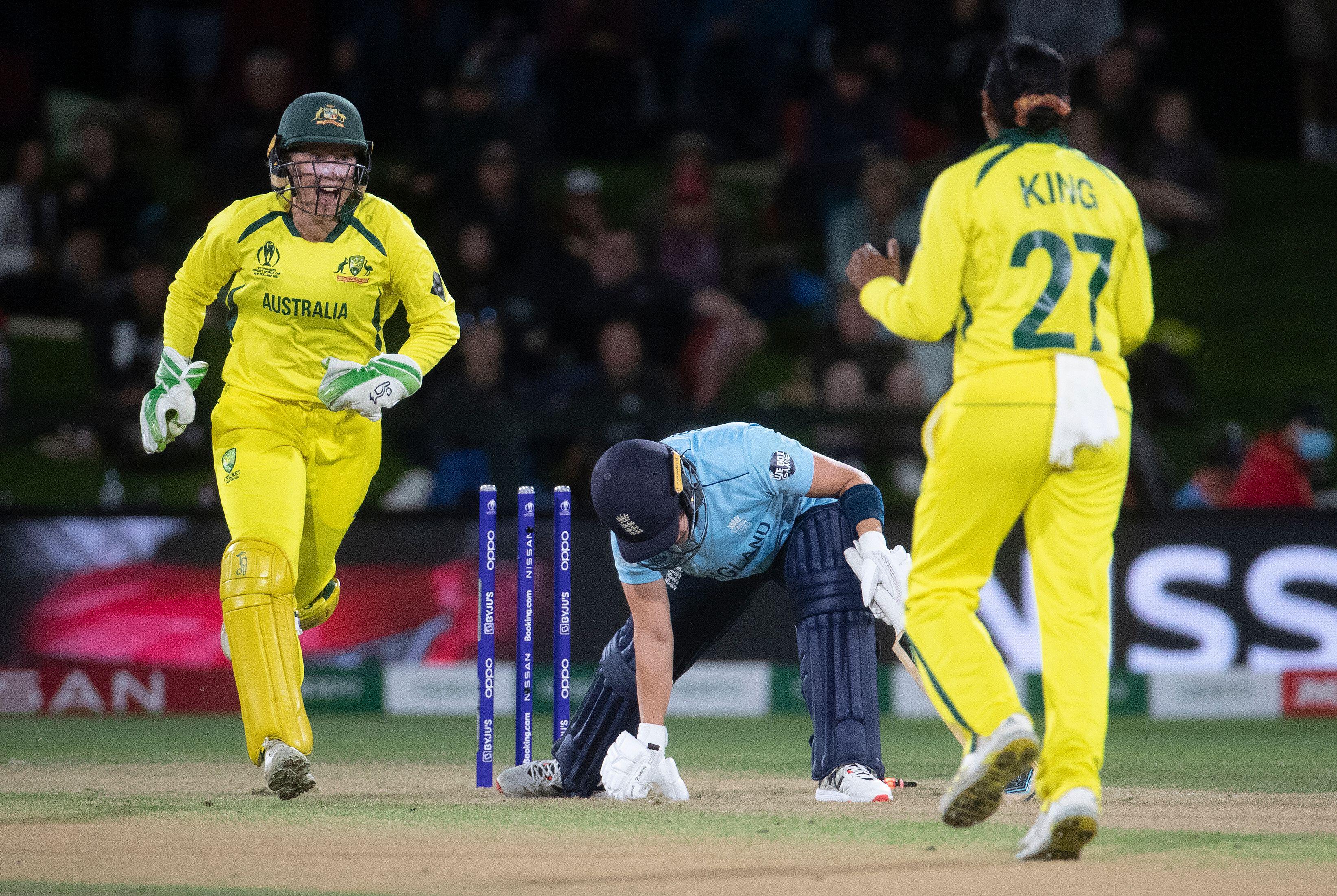
England’s Katherine Brunt stumped by Australia wicket keeper Alyssa Healy off the bowling of Emilia Surch’s favourite player Alana King during the ICC Women’s World Cup 2022 Final match at Hagley Oval, Christchurch..PA Images / Alamy Stock Photo
If you had to assemble a relay team consisting of yourself and three cricket players, which three players would you have on your team and why?
“It’d have to be an Australian Team because I don’t know enough players from other countries and I’m assuming for a basic 4 x 100m, which is a bit longer than the distance between the wickets, so I’d go Alex Carey to Steve Smith to Marnus Labuschagne and finish with Dave Warner (had a little help from dad on this).”
A thank you message from Emelia to her supporters
Emelia’s narrative unfolds as a testament to the pursuit of excellence across diverse aspects of life, embodying the spirit of a young athlete determined to make her mark on the world stage. Stay connected with Emelia’s journey through her social media platforms and lend your support to her endeavours with the hashtag #SurchForGold. Your encouragement will undoubtedly play a crucial role in propelling her towards achieving greatness.
Sydney 2000 Olympics – Athletics – Women’s 400m – Final Contributor:PA Images / Alamy Stock Photo
The road to Olympic success is paved not only with rigorous training and physical prowess but also with a strategic and resilient mindset. In an interview with Graham Winter, the psychologist for the Australian Olympic team during the Sydney 2000 Olympic Games, we delve into the profound insights that underpin the preparation of athletes for the grandeur of the Olympic stage.
Winter begins by emphasising the significance of creating a robust program around athletes. While acknowledging the occasional outlier who excels in any situation, he underscores the importance of developing a foundation that enables athletes to perform consistently under pressure. The key, he suggests, lies in separating one’s identity from performance, recognising that the pressure of defining oneself through their achievements can be overwhelming.
According to Winter, successful coaches focus on three fundamental aspects of athlete development. First and foremost is the mastery of basics – instilling the ability to perform fundamental skills repeatedly and consistently, especially when the stakes are high. The second aspect involves clarity about individual strengths and trusting them under pressure. Lastly, in a team environment, athletes must learn to operate cohesively, applying pressure collectively to achieve the desired outcome.
Winter dispels the myth that athletes must comprehend the enormity of the Olympic Games. Instead, he advocates for athletes to stay on task, honing their ability to remain focused amidst the chaos. Coaches play a pivotal role in building trust and encouraging athletes to rely on the support system around them, including teammates, coaches, and management.
The psychologist emphasises that the goal is not to perform in the Olympics but in one’s sport at the highest level on a given day. Athletes should view the Olympic stage as an opportunity to test themselves and celebrate the culmination of their preparation.
Winter reflects on the remarkable example of Cathy Freeman at the Sydney Olympics, highlighting her ability to operate effectively in a high-pressure environment. He attributes such performances to mindfulness – the capacity to stay calm, composed, and focused under pressure.
In conclusion, Winter stresses the importance of preparation and drilling. Under pressure, athletes revert to what they have practised and prepared for. The basics, coupled with inspiration, form the winning combination for Olympic success. As athletes embark on their Olympic journey, Winter’s words serve as a reminder that the path to glory is not just physical; it is a mental game that requires resilience, focus, and trust in oneself and the team.
In cricket, as in the Olympics, the importance of a well-structured program around the players cannot be overstated. The parallels lie in creating an environment that nurtures consistent performance under pressure. Just as Winter emphasizes the basics in individual sports, in cricket, players must hone their fundamental skills, such as batting techniques, bowling variations, and fielding precision, to execute them repeatedly in the heat of competition.
Separating one’s identity from performance is equally relevant in cricket. Batters, bowlers, and fielders alike can be susceptible to the weight of expectations, especially in high-stakes matches. By cultivating a mindset that sees performance as an aspect of the game rather than a definition of self-worth, cricket players can navigate the challenges with a more explicit focus and resilience.
In the team context, the ability to operate collectively is paramount. Cricket is inherently a team sport, and success often hinges on seamless coordination among players. Trusting teammates, coaches, and the overall game plan becomes crucial for a cricket team preparing for a major tournament or series. The capacity to apply pressure as a cohesive unit and adapt to different match situations aligns with Winter’s emphasis on team dynamics in sports.
As with individual athletes, cricketers face the challenge of not getting overwhelmed by the enormity of major tournaments. The cricketing world, with its passionate fan base and media scrutiny, can create an environment comparable to the intensity of the Olympic Games. Here, the role of coaches in building trust and helping players stay on task is pivotal. The focus should be on preparing for the sport, rather than succumbing to the external pressures associated with the magnitude of the event.
Drawing inspiration from Winter’s insights, cricketers can approach their matches with a mindset geared towards testing themselves and celebrating their preparation. The combination of drilled basics and moments of inspiration can be the winning formula for success on the cricket field, just as it is on the Olympic stage. Ultimately, the principles of mental resilience, focus, and trust in oneself and the team resonate across disciplines, illustrating the profound impact of psychological preparation in the pursuit of sporting excellence.
In this episode of the Cricket Library Podcast, host Matt Ellis sits down with one of Australia’s most prolific cricket writers, Ken Piesse. With a career spanning decades, Ken has written more than 90 books on the game and served as editor of the legendary Cricketer magazine.
His work has chronicled the stories of great players, historic matches, and the rich traditions that make cricket such a unique sport.
In this conversation, Ken reflects on:
His journey into cricket journalism and publishing Memorable encounters with cricket legends.
The art of telling cricket stories through books.
The enduring charm of grassroots and country cricket.
His latest book celebrating the history and characters of Victorian country cricket.
It’s a fascinating insight into the craft of cricket writing and the passion that keeps the stories of the game alive. If you love cricket history, books, and storytelling, this is an episode you won’t want to miss.
🔔 Subscribe for more conversations with the people who shape the game.
Head to https://cricketbooks.com.au/product-c… to find all of Ken's work and much more!










 thecricketlibrary.com