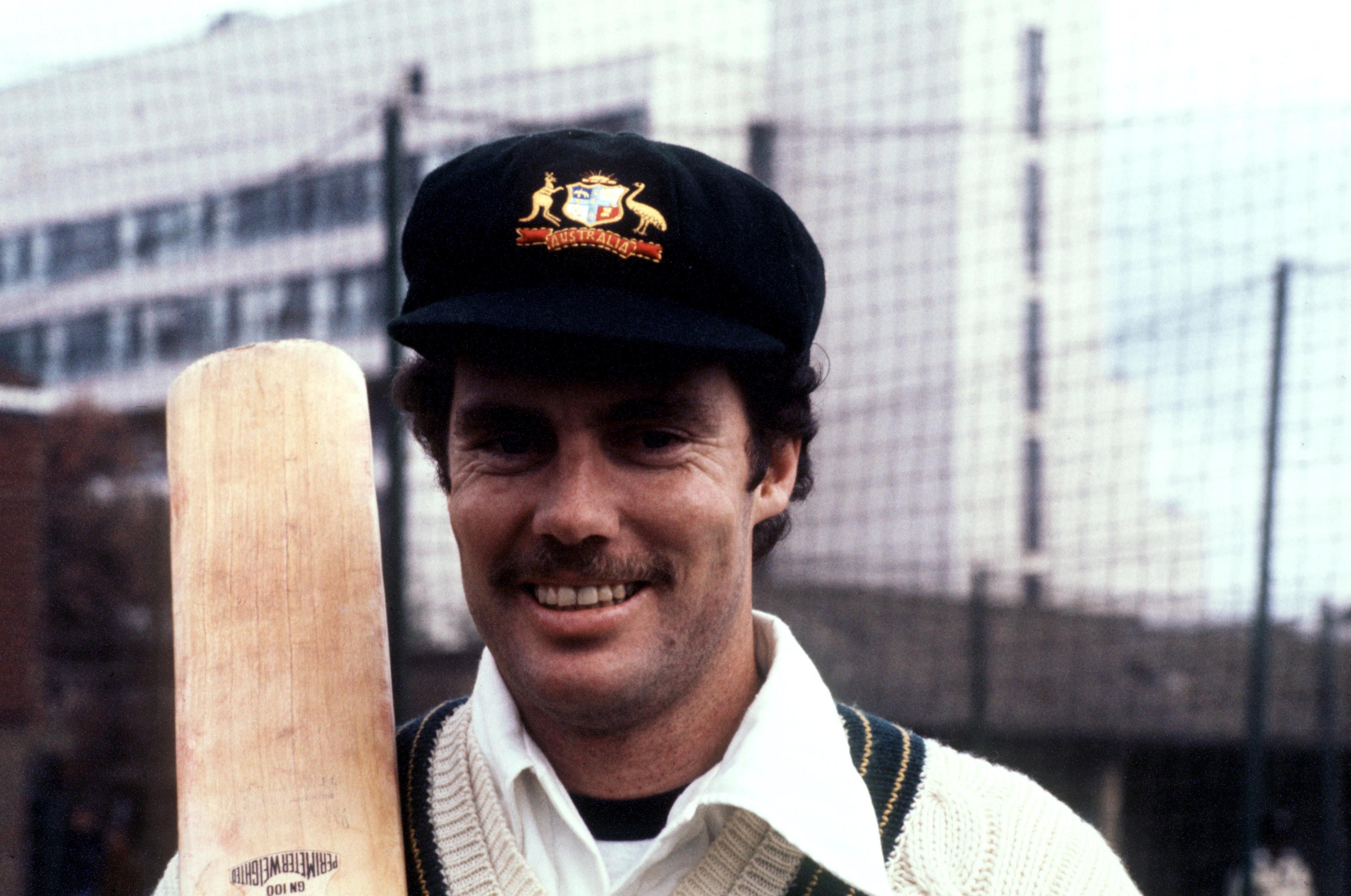
Greg Chappell’s Batting Evolution: Sir Donald Bradman’s Crucial Advice

PA Images / Alamy Stock Photo

Greg Chappell, one of cricket’s legendary figures, recently shared a fascinating story on the Cricket Library Podcast with Matt Ellis about a significant moment early in his career. It was during his second season for South Australia when Chappell received invaluable advice from none other than the great Sir Donald Bradman himself. This advice would go on to shape Chappell’s batting technique and contribute to his remarkable success.

At the time, Chappell had already made a name for himself as a promising young talent, primarily known for his proficiency on the leg side. However, Bradman had been closely observing Chappell’s career, having even spoken to Chappell’s school coach, Chester Bennett, about his batting. Bradman suggested that Chappell needed to widen his range as a batsman, as he was predominantly a leg side player.

In the Cricket Library Podcast interview, Chappell reminisces, “I was very much a leg side player as a youngster. I don’t know whether someone had taught me to hold the bat in this way, but my top hand, the back of my top hand faced the bowler, which is a very good grip for leg side play, but it’s not a great grip for offside play.”

Although Bradman had earlier suggested to Chappell’s school coach that he should alter his grip, Chappell’s father had intervened, believing that his son was doing well with his current technique. Consequently, Chappell entered the first-class arena with his original grip intact. Despite achieving success with that grip, he realized that most of his runs were still being scored on the leg side.

The turning point came during a match against India in Chappell’s second season. Coincidentally, the South Australian team was placed in a smaller dressing room typically assigned to visiting teams, and Bradman, who served as a selector and was involved in both South Australian and Australian cricket, entered their dressing room. It was an unusual occurrence for Bradman to engage in conversations with young players, but fate had it that Chappell found himself near the exit as Bradman was leaving.

Seizing the opportunity, Chappell greeted Sir Donald and engaged in a brief conversation. It was during this encounter that Bradman offered the pivotal advice: “By the way, I’d change that grip if I were you.” Intrigued, Chappell asked for Bradman’s suggestion, to which he responded, “I’d suggest the grip that I used worked pretty well.” Chappell, eager to learn from the legend, handed Bradman a bat and asked him to demonstrate.

Bradman showed Chappell a neutral grip, where the thumb and forefinger of both hands rested on the bat’s handle, forming a V-shape between them. He emphasized that it might feel uncomfortable initially but encouraged Chappell to persevere, as it would enhance his ability to score runs on the off side. Bradman left, but not before adding, “By the way, I’ve given this piece of advice to one other player. He didn’t take it, and he’s no longer in the team.”

Intrigued by the advice, Chappell wasted no time in implementing it. He called upon his teammates, including bowlers Jeff Hammond and Terry Jenner, and headed to the nets for a trial run. Surprisingly, the new grip felt comfortable, and Chappell decided to use it in his batting that day. From that point on, he continued with the adjusted grip for the rest of his illustrious career.

Chappell acknowledges that Bradman’s advice was the best he received as an adult. The altered grip allowed him to broaden his range, enabling him to score runs more consistently on the off side. In a remarkable twist, Chappell ultimately surpassed Bradman’s tally of Test match runs, forever etching his name in cricketing history.

Greg Chappell’s encounter with Sir Donald Bradman serves as a testament to the influence and impact one piece of advice can have on a cricketer’s career. It highlights the importance of remaining open to guidance, even from the most revered figures in the game, and the willingness to adapt and evolve one’s technique for continued growth.

As cricket enthusiasts reflect on the remarkable career of Greg Chappell, his batting transformation stands out as a testament to the power of mentorship and the enduring legacy of Sir Donald Bradman’s wisdom.
Adrian Griffith on Cricket, Identity & Life Beyond the Game The Cricket Library

Former West Indies opening batter, Adrian Griffith joins the Cricket Library Podcast for a fascinating and deeply reflective conversation about cricket, identity, purpose, and life beyond the game. Growing up in Barbados, Adrian rose through Caribbean cricket to become an opening batter for the West Indies cricket team during one of the most compelling eras in world cricket. He shares stories from his early journey into first-class cricket, touring Australia, facing elite fast bowling, and the pressures that come with representing the maroon cap at the highest level. One of the highlights of the episode is Adrian reflecting on his remarkable Test match against New Zealand, where he became the first West Indian cricketer to bat on all five days of a Test match — a rare and unique achievement in cricket history. Adrian also revisits the unforgettable Test against Australia where Brian Lara produced one of the greatest innings the game has ever seen, offering incredible insight into Lara’s brilliance and the atmosphere surrounding that iconic moment in cricket and the story behind his selection in the team. Beyond the playing field, Adrian discusses his transition into officiating as an ICC match referee and his current work with AGC, where he continues contributing to leadership, mentoring, and the development of people within and beyond cricket. While the conversation celebrates Test cricket, West Indies history, and unforgettable moments, it also explores a deeper theme — that achievements on the field do not fully define a person’s worth. Adrian shares thoughtful reflections on transition, identity, leadership, and building a meaningful life beyond cricket. Topics include: • The significance of the Maroon West Indies Cricket Cap • Touring Australia • Batting on all five days of a Test match • Test cricket pressures • Caribbean cricket culture • ICC match refereeing • Leadership and mentoring • AGC and life after cricket • Purpose and identity beyond sport If you love cricket history, long-form conversations, and powerful human stories from inside the game, this episode is for you.
  1. Adrian Griffith on Cricket, Identity & Life Beyond the Game
  2. Babette de Leede – World Cup & Global Cricket Journey
  3. Paul Harris – The Journey of a Proteas Spinner
  4. Paul Van Meekeren – Associate Cricket To World Stage
  5. Ken Piesse – A Life In Cricket Writing

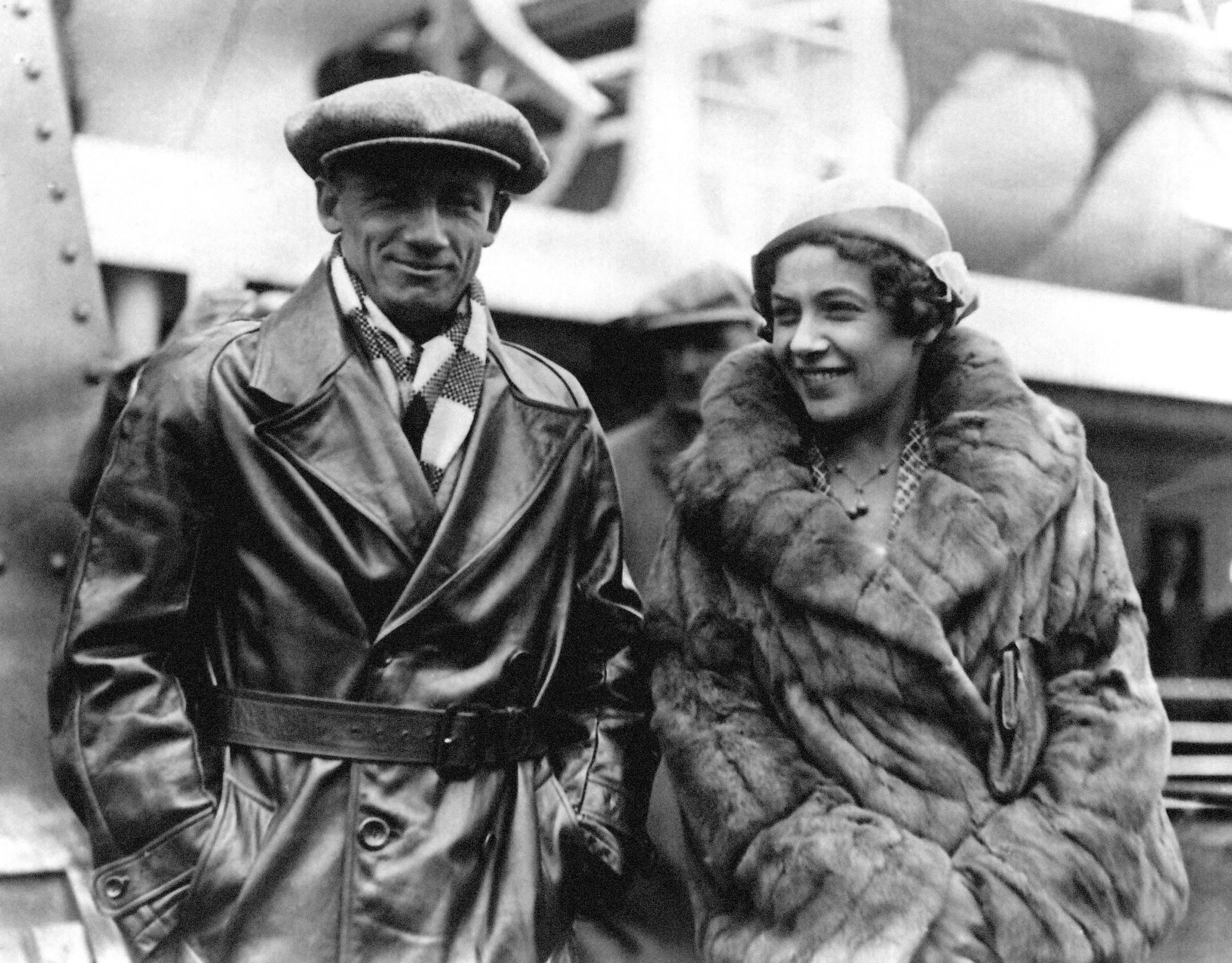
Double the celebrations for Bradman on his sixth wedding anniversary

DON BRADMAN 1932: Australian cricketer Don Bradman and his wife photographed at Wellington, New Zealand, from San Francisco with the Australian Cricket Team en route for Sydney. PA Images / Alamy Stock Photo

April 30 was a significant date in the life of Donald George Bradman for a number of reasons. Certainly in the realms of his personal life, this day in 1932, marrying Jessie Menzies in Burwood (which interestingly the suburb where I took my wife for our first date but that is a tale for another day) would have to be very high on the list.

From a cricketing perspective, two years earlier, on April 30, he and Bill Woodfull were beginning to pile on the runs against Worcestershire, with Woodfull 95 not out & Bradman 75 not out overnight. Woodfull would go on to make 133, and The Don peeled off 236 before both were dismissed to the leg spin of George Brook. 

This was Bradman’s first game on English soil having played 4 Tests prior in Australia and despite being dropped after his first test match had the more than solid returns of 431 runs @ 61.57 with two tons already to his name. Needless to say, this innings was just the beginning of what would be a record breaking Ashes campaign for Bradman netting 974 test match runs including his career best 334 at Leeds, double centuries at Lord’s and the Oval as well as a ton in the second innings of the first test at Nottingham.

Celebrating important life milestones is something that I strongly encourage and Bradman demonstrated this in style on April 30 in 1938. On the two previous Ashes tours when Australia had played Worcestershire, the home side had won the toss and batted, subsequently got rolled and then watched Bradman pile on the runs. This time around, they liked their chances bowling first and had the visitor’s 1 for 9 early doors. The only problem with this theory was that it brought DG Bradman to the crease who crunched 258 off 290 deliveries ensuring his sixth wedding anniversary would be one to remember. 

Matt Ellis from the Cricket Library speaking on ABC Radio about Bradman’s success.

Interestingly, 1938 was the Ashes series where Bradman had lobbied for the players to have their wives on tour. This off-field stability certainly appeared to work wonders for Bradman who returned to Australia with some incredible numbers; 118, 143, 225, 107, 186 and 135 in consecutive innings to help South Australia to a Sheffield Shield title.

It is fair to say that Bradman took a liking to the conditions at Worcester, scoring 236 on his first visit to the ground, followed by 206 on the following Ashes tour and the 258 just mentioned. Double tons for fun, I guess that is a very Bradman thing to do.

Thankfully for the home side, on Bradman’s last Ashes tour, they were able to restrict the great man to 107. Arthur Morris also made a ton for the visitors with the Australians winning by an innings and 17 runs.

How will you celebrate your next anniversary? Maybe DG Bradman’s banquet of runs on his sixth wedding anniversary could be something to aspire to?

Adrian Griffith on Cricket, Identity & Life Beyond the Game The Cricket Library

Former West Indies opening batter, Adrian Griffith joins the Cricket Library Podcast for a fascinating and deeply reflective conversation about cricket, identity, purpose, and life beyond the game. Growing up in Barbados, Adrian rose through Caribbean cricket to become an opening batter for the West Indies cricket team during one of the most compelling eras in world cricket. He shares stories from his early journey into first-class cricket, touring Australia, facing elite fast bowling, and the pressures that come with representing the maroon cap at the highest level. One of the highlights of the episode is Adrian reflecting on his remarkable Test match against New Zealand, where he became the first West Indian cricketer to bat on all five days of a Test match — a rare and unique achievement in cricket history. Adrian also revisits the unforgettable Test against Australia where Brian Lara produced one of the greatest innings the game has ever seen, offering incredible insight into Lara’s brilliance and the atmosphere surrounding that iconic moment in cricket and the story behind his selection in the team. Beyond the playing field, Adrian discusses his transition into officiating as an ICC match referee and his current work with AGC, where he continues contributing to leadership, mentoring, and the development of people within and beyond cricket. While the conversation celebrates Test cricket, West Indies history, and unforgettable moments, it also explores a deeper theme — that achievements on the field do not fully define a person’s worth. Adrian shares thoughtful reflections on transition, identity, leadership, and building a meaningful life beyond cricket. Topics include: • The significance of the Maroon West Indies Cricket Cap • Touring Australia • Batting on all five days of a Test match • Test cricket pressures • Caribbean cricket culture • ICC match refereeing • Leadership and mentoring • AGC and life after cricket • Purpose and identity beyond sport If you love cricket history, long-form conversations, and powerful human stories from inside the game, this episode is for you.
  1. Adrian Griffith on Cricket, Identity & Life Beyond the Game
  2. Babette de Leede – World Cup & Global Cricket Journey
  3. Paul Harris – The Journey of a Proteas Spinner
  4. Paul Van Meekeren – Associate Cricket To World Stage
  5. Ken Piesse – A Life In Cricket Writing