
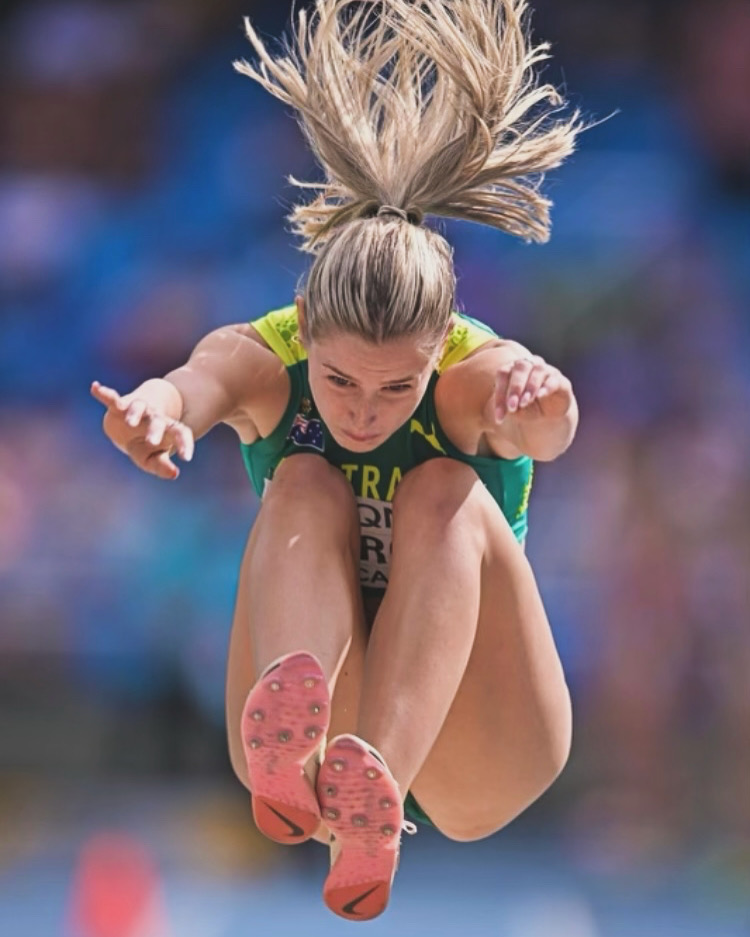
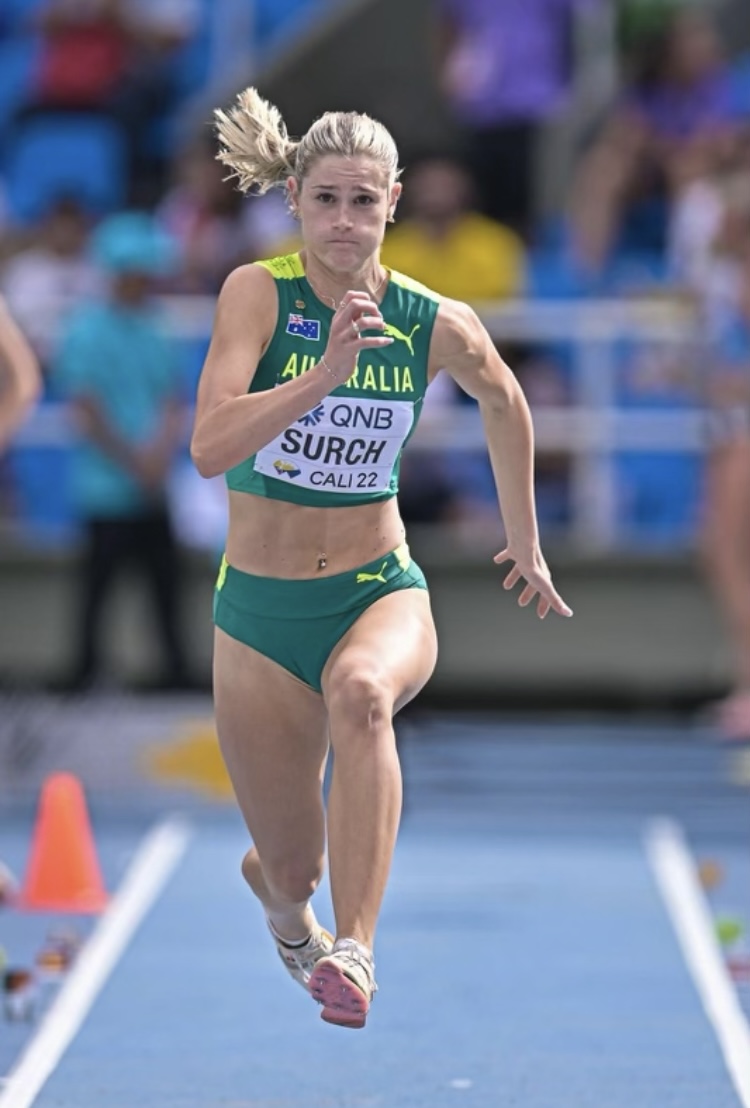
In the dynamic landscape of Australian athletics, Emelia Surch emerges as a multi-faceted talent with a story that transcends the boundaries of track and field. At 20, she has not only represented Australia on the global stage in the World U20 Championships in Columbia, securing a remarkable 4th place in the long jump with a leap of 6.45m, but she also holds the esteemed titles of the current under-20 Oceania champion and record holder in long jump and hurdles. Amidst her exploits on the track, Emelia is navigating the challenging realm of academia, pursuing studies in nursing at university, and navigating 4 am starts working at the Coles bakery. A true embodiment of dedication and versatility, she also trains rigorously six days a week for the seven events in the heptathlon, showcasing her commitment to excellence in every aspect of her life. Guiding her on this extraordinary journey is coach Glynis Nunn, a 1984 Olympic Gold Medalist, who envisions Olympic success for Emelia with the proper support. “If Emelia had funding, and we can replace the work at Coles with preparation, recovery, and training, I know I have an Olympic Athlete who is capable of achieving something very special,” says Nunn. As Emelia seeks sponsors to elevate her athletic career and studies to new heights, her narrative unfolds as a harmonious blend of record-breaking achievements, Olympic aspirations, and the relentless pursuit of excellence on all fronts.
With a genuine desire to unveil the intricacies of Emelia’s journey, the Cricket Library actively sought her perspective, and she graciously shared her insights with us, infusing the conversation with a delightful sprinkle of cricket.
Balancing the demands of athletic training, nursing studies, and the heptathlon is undoubtedly challenging. How do you manage your time effectively to excel in all these diverse aspects of your life?
“I’ve been really fortunate to have the guidance of my coach and mentor Glynis Nunn, who has obviously experienced these demands herself. I also gained a wealth of knowledge through the Gold Coast Academy of Sport’s future star program, which had a component that specifically focused on time management. I have found that invaluable.”
Studying nursing at university adds another layer to your already busy life. How do you see the connection between your studies and athletics, and how does one influence the other in your personal and professional development?
“I’ve just completed my second year of nursing and I absolutely love it. Knowing and understanding more about the body, medication, and health obviously helps me to take better care of myself, particularly when it comes to illnesses and injuries.”
Coach Glynis Nunn has expressed confidence in your Olympic potential. How does her mentorship guide your aspirations, and what role does she play in helping you navigate the complexities of combining sports and studies?
“I’m pretty lucky to have an Olympic Champion as a coach, role model, and mentor. Glynis and I have a very special relationship. She’s been my coach for 7 years, and in that time there have been many highs and lows, but I can tell her anything and our relationship is built on trust. She is the kindest, most generous person who gives it to me straight. I definitely don’t take that for granted.”
Training for seven events in the heptathlon is a substantial commitment. Can you share some of the challenges you face in preparing for such a diverse range of disciplines and how you overcome them?
“Basically, it means training for multiple events at each session, which means my sessions are longer. For example, on a Monday, I’ll arrive before everyone else and get a Javelin session in, before a technical Long Jump session, and then track work. Sometimes my session can be up to 3 hours. On top of training for the 7 events, I also need days for gym and strength work as well as recovery.”
With the ultimate goal of reaching the Olympics, what steps are you taking to qualify, and how do you envision your journey towards achieving that dream?
“Actually, with support from Cameron at Global Sports 360 and some very generous people, I’ve been able to give up working at Coles for the next 6 months and focus entirely on my training. My goal is to qualify for the Oceania Championships in Fiji and give myself the best chance of making the Australian Team. Having extra time in my week means my coach and I have been able to schedule in additional sessions and include purposeful recovery sessions too, which I’ve never been able to do before.”
As you seek sponsors to support your athletic endeavors and studies, what message would you like to convey to potential sponsors, and how do you believe their backing can make a significant difference in your pursuit of excellence?
“Sponsorship and support will mean I can fully commit to my intense training load, honing my skills and refining the technical elements of each event and ensure I have enough time for recovery sessions to guarantee my body gets the necessary rest to perform at its peak. It means I have a real chance of turning my dreams into reality and can represent my country on the world stage.
I also believe I am a good ambassador and role model, particularly for girls in sport. I give 100% to everything I do and I’m determined to reach my full potential. Knowing that people are behind me, supporting me, just fuels my drive to be the best.”
From your perspective as an athlete in a different discipline, what do you admire most about the physical and mental skills required in cricket?
“I’ve always admired the mental strength of cricket players. I just have no idea how the players can be out there for extended periods of time be completely focused for the entire duration of the game. Also strategizing and the tactical aspect of cricketers is pretty impressive and aside from running the 800m in a heptathlon there isn’t really any strategizing you just need to perform every event at 100% and give it all you’ve got every time.”
Kate Peterson has a background in Javelin and is now making her mark in Cricket as a fast bowler. Considering the technical aspects of cricket, are there specific skills or techniques in the sport that you find particularly impressive or intriguing, and do you see any parallels with skills in your own discipline?
“I really feel like cricket requires so many very different skills, they are like the heptathletes of bat and ball games, and even though I’m a heptathlete the only skill I’d nail would be the sprint between the wickets. There’s no way I could concentrate like they do for such long periods of time. As for Javelin, it’s most definitely is not my strongest event, I most certainly could use some tips from Kate.”
Do you have any memories of playing or watching cricket growing up?
“I have only recently started watching cricket and to be honest am most interested in the women’s league, but I feel like it’s always on in the background, in the lounge room, in summer. As for playing, cricket on the beach at camping is about the only experience I have actually playing.”
Who is your team in the Big Bash?
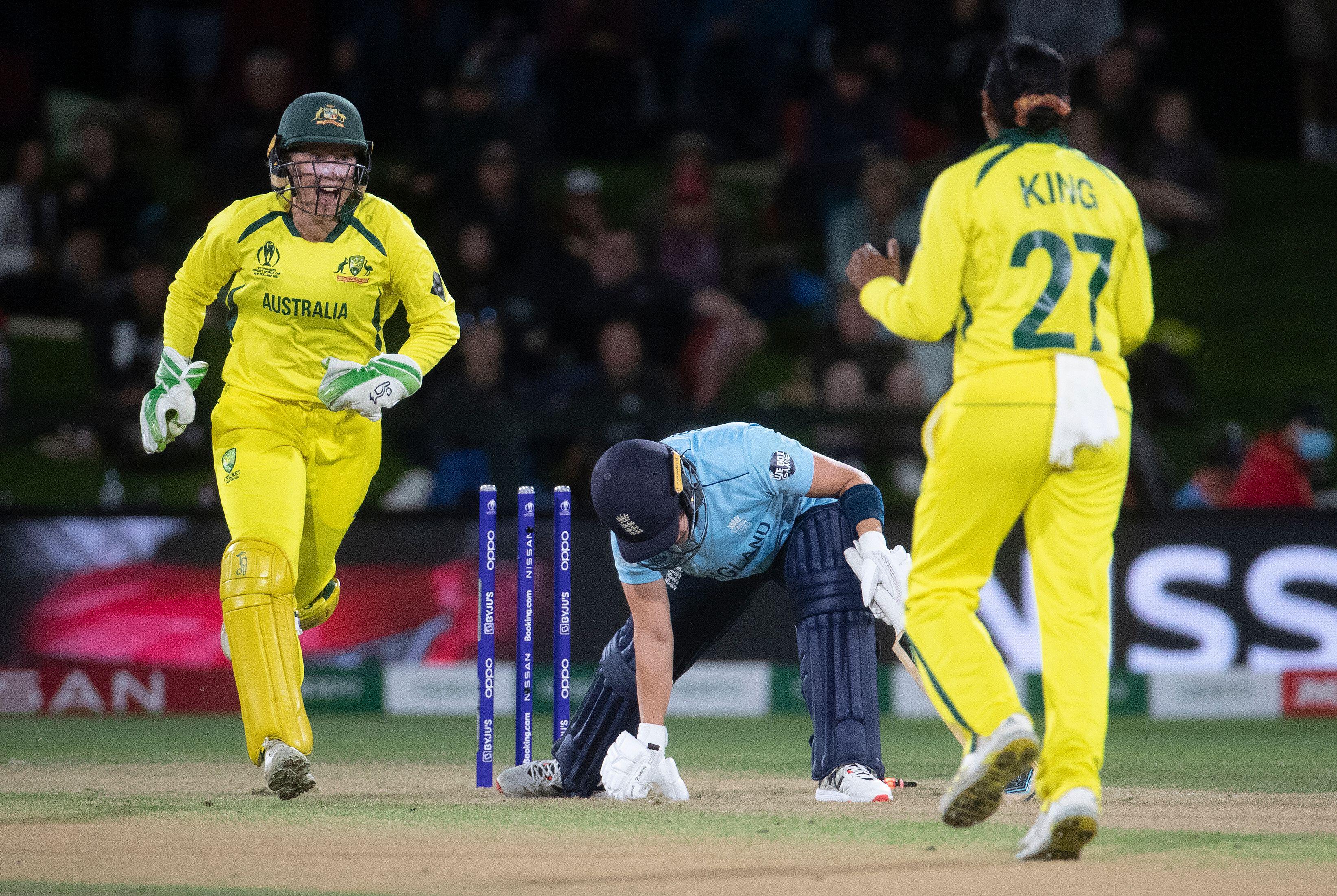
“I’m an Alana King fan. So definitely the Perth Scorchers, but also the Brisbane Heat when they are playing any of the other teams.”
If you had to assemble a relay team consisting of yourself and three cricket players, which three players would you have on your team and why?
“It’d have to be an Australian Team because I don’t know enough players from other countries and I’m assuming for a basic 4 x 100m, which is a bit longer than the distance between the wickets, so I’d go Alex Carey to Steve Smith to Marnus Labuschagne and finish with Dave Warner (had a little help from dad on this).”
Emelia’s narrative unfolds as a testament to the pursuit of excellence across diverse aspects of life, embodying the spirit of a young athlete determined to make her mark on the world stage. Stay connected with Emelia’s journey through her social media platforms and lend your support to her endeavours with the hashtag #SurchForGold. Your encouragement will undoubtedly play a crucial role in propelling her towards achieving greatness.


 thecricketlibrary.com